A Guide for Parents from Kanopi Kids Pediatric Dentistry in Antioch, CA
Baby bottle tooth decay is one of the most common dental problems our pediatric dentistry team sees in young children, and it is also one of the most preventable. It happens when a baby or toddler's teeth are exposed to sugary liquids for extended periods, most often through a bottle used during sleep or nap time. Left untreated, it can cause pain, infection, and tooth loss in children who have barely started using their teeth.
The good news is that once you understand what causes it, preventing it is straightforward. Here is what every parent needs to know.
Baby bottle tooth decay, also called early childhood caries or nursing bottle syndrome, refers to severe tooth decay that develops in infants and toddlers, typically affecting the upper front teeth first. It gets its name from one of the most common causes: putting a baby to bed with a bottle containing milk, formula, juice, or any sweetened liquid.
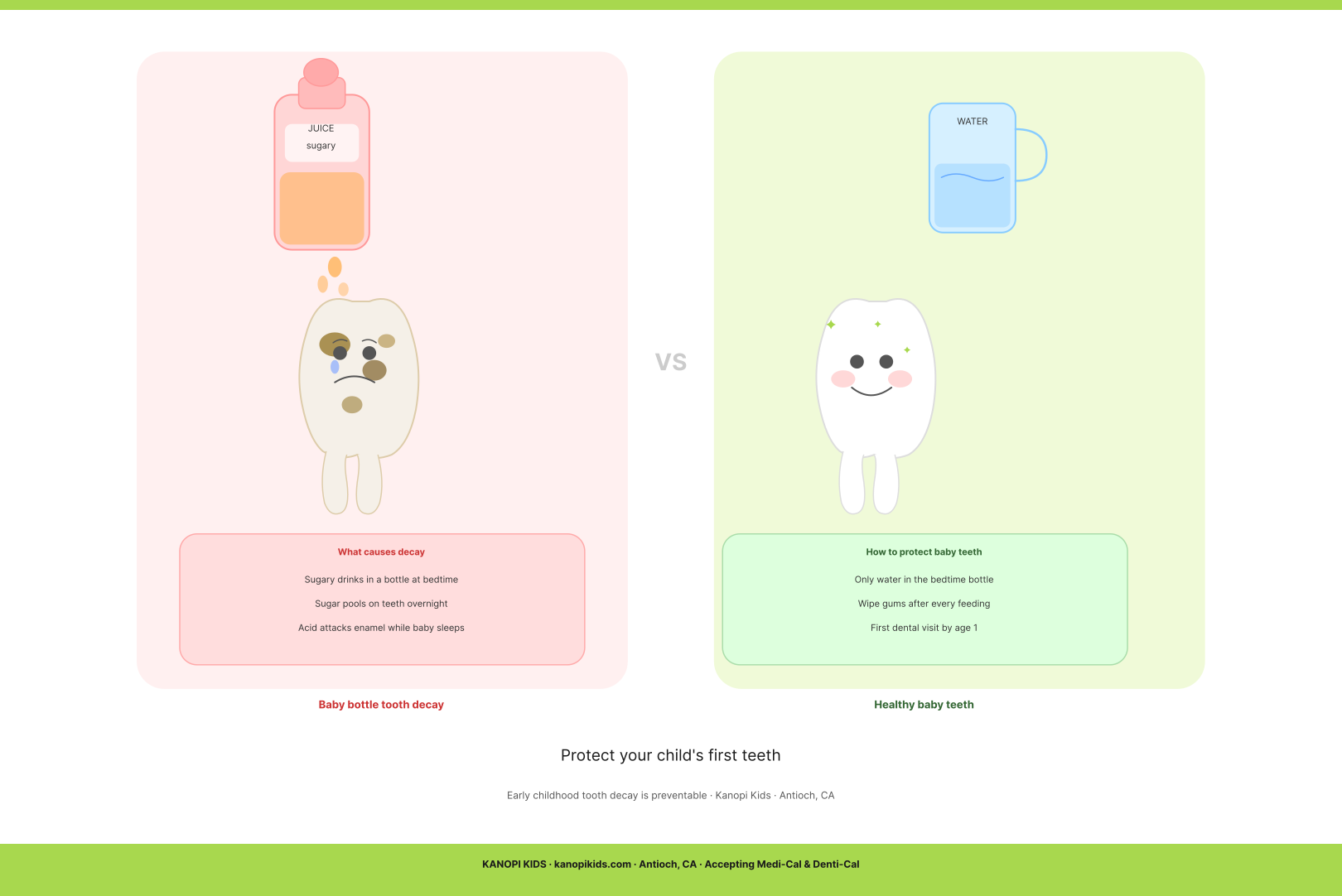
When a child falls asleep with a bottle, the liquid pools around the teeth for hours. Bacteria in the mouth feed on the sugars in that liquid and produce acid that attacks tooth enamel. Because saliva flow slows dramatically during sleep, there is nothing to neutralize that acid or wash it away. The result is decay that can progress rapidly, sometimes affecting multiple teeth at once.
The most direct cause is prolonged sugar exposure on baby teeth, but the specific habits that lead to it are worth understanding clearly:
This is one of the most common questions our team hears, and the answer is absolutely yes. Baby teeth are not just placeholders. They help children chew food properly, support speech development, and hold space in the jaw for permanent teeth. When baby teeth are lost too early due to decay, the surrounding teeth can shift into the gap and block the permanent tooth from erupting correctly.
Beyond the structural role, tooth decay in young children causes real pain. A toddler with a severe cavity in a front tooth is in discomfort every time they eat, drink, or smile. Treating advanced early childhood decay often requires sedation dentistry, which is why prevention is so much simpler than treatment.
If you are concerned about your child's teeth or are not sure whether what you are seeing is normal, our pediatric dentistry team at Kanopi Kids (kanopikids.com/service/pediatric-dentistry) can evaluate your child and give you a clear picture of what is happening and what to do.
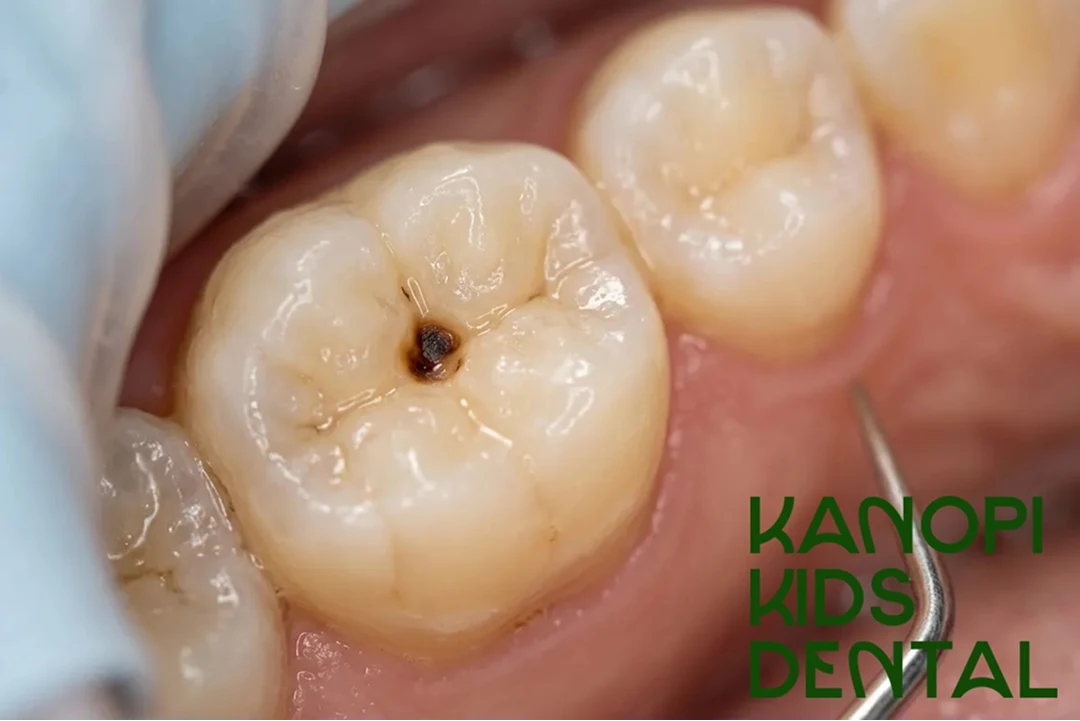
In the early stages, baby bottle tooth decay can be difficult to spot without a dental examination. The first signs are often white spots or a chalky appearance near the gum line of the upper front teeth. As decay progresses, these areas may turn yellow, brown, or black, and the teeth may appear pitted, chipped, or noticeably smaller than normal.
If you notice any discoloration, spots, or unusual texture on your child's teeth, do not wait for the next scheduled visit. Early treatment is significantly simpler and less invasive than treatment for advanced decay. Our pediatric dental team in Antioch can assess the situation quickly and let you know what the next step should be.
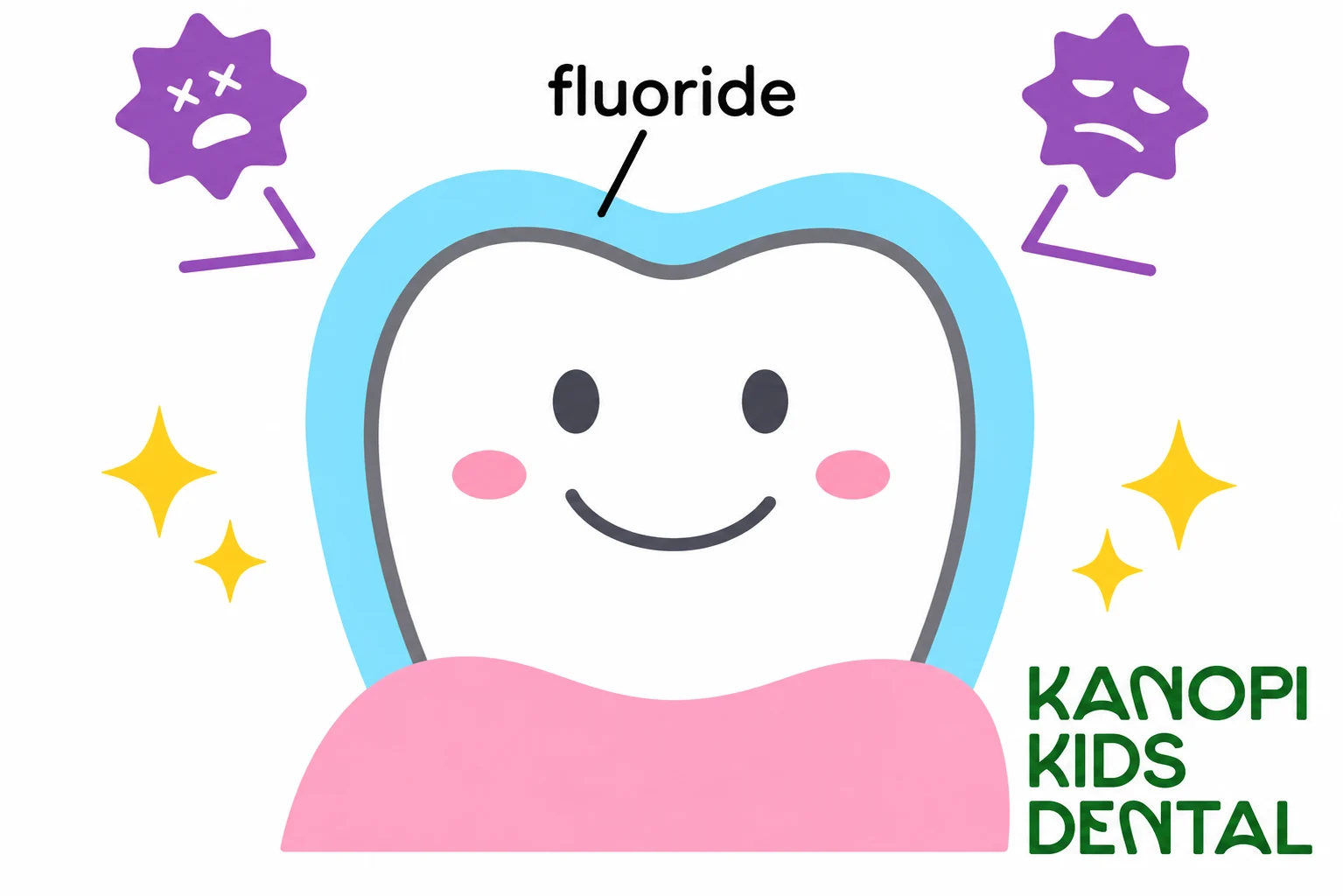
Treatment for baby bottle tooth decay depends on how advanced it is when it is caught. In the earliest stages, fluoride varnish applied by a pediatric dentist can help remineralize the affected enamel and stop decay from progressing further. Slightly more advanced cases may require fillings or stainless steel crowns to restore the tooth. Severe cases, particularly in very young children, may require treatment under sedation.
At Kanopi Kids, we see children from Antioch, Brentwood, Oakley, Pittsburg, Discovery Bay, Bay Point, and across Contra Costa County. We accept Medi-Cal and Denti-Cal, which means cost should never be a reason to delay care for your child's teeth. The earlier we see a child, the more options we have and the simpler the treatment tends to be.
Breast milk does contain natural sugars, and prolonged nighttime nursing after teeth have erupted can contribute to early childhood tooth decay, especially when the baby falls asleep at the breast and milk remains in contact with the teeth. After feedings, wiping the gums and teeth with a damp cloth reduces this risk significantly.
The American Academy of Pediatrics recommends transitioning away from a bottle by 12 to 18 months of age. The earlier a child moves to a cup, the lower the risk of baby bottle tooth decay. Starting to introduce an open cup or sippy cup around 6 months alongside bottle feeding makes the transition much easier.
The American Academy of Pediatrics recommends no juice at all for children under 12 months, and no more than 4 ounces per day for children aged 1 to 3. Juice should always be offered in a cup rather than a bottle, and never as a bedtime or nap-time drink. Water is the best between-meal drink for children of all ages.
In most cases, yes. Untreated cavities in baby teeth can deepen, reach the nerve, cause pain and infection, and lead to premature tooth loss that affects the spacing of permanent teeth. Whether a filling is the right treatment depends on how advanced the decay is and which tooth is involved. Your child's pediatric dentist can help you understand the options.
By their first birthday, or within six months of the first tooth erupting, whichever comes first. Early visits allow the pediatric dentist to catch any signs of decay before they progress, give parents specific guidance for their child's situation, and help establish a positive relationship with dental care from the very beginning.
Kanopi Kids Pediatric Dentistry | Antioch, CA
Serving Antioch, Brentwood, Oakley, Pittsburg, Discovery Bay, Bay Point, and surrounding Contra Costa County. We accept Medi-Cal, Denti-Cal, and most major insurance plans.
kanopikids.com | 3110 Buchanan Rd, Suite B, Antioch, CA | (925) 281-4893
 (925) 281-4893(925) 281-4893(925) 281-4893(925) 281-4893(925) 281-4893(925) 281-4893